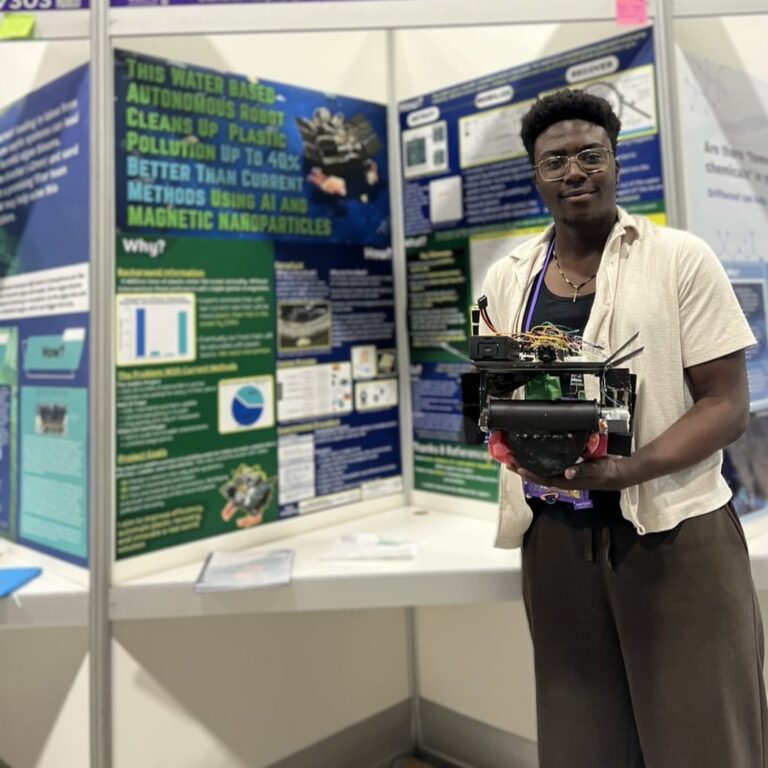

Plastic pollution threatens global ecosystems; aquatic plastic debris can fragment into smaller particles, be ingested by organisms, and transport associated chemicals through trophic levels. If aquatic plastic contamination is not stringently mitigated, both marine biodiversity and public health face significant, systemic risks. Existing remediation methods like nets, trawlers and filters often harm biological life and heavily rely on manual labour, maintenance and intervention. Plastic pollution cleanup needs to be selective and autonomous.
This project investigates whether an AI (Artificial Intelligence)-guided ferrofluid-assisted collection system can selectively remove plastic debris from water bodies. A new ferrofluid and magnetic drum system, which selectively remediates plastics, was created, and a plastic-targeting AI pilot was trained using a handmade dataset.
For validation, a controlled proof-of-concept study was done in a pool environment against multiple plastic polymers of varying sizes. After 9 trials, the robot had 51.85% removal efficiency and could collect 1.73 pieces of plastic per minute. The system outperformed a preliminary sieve-based baseline for microplastic-scale particles, illustrating the pass-through limitation of coarse mechanical screening.
The prototype demonstrates the viability of combining AI with ferrofluid-assisted remediation to clean up aquatic plastic contamination, while also identifying limitations that future iterations must overcome.