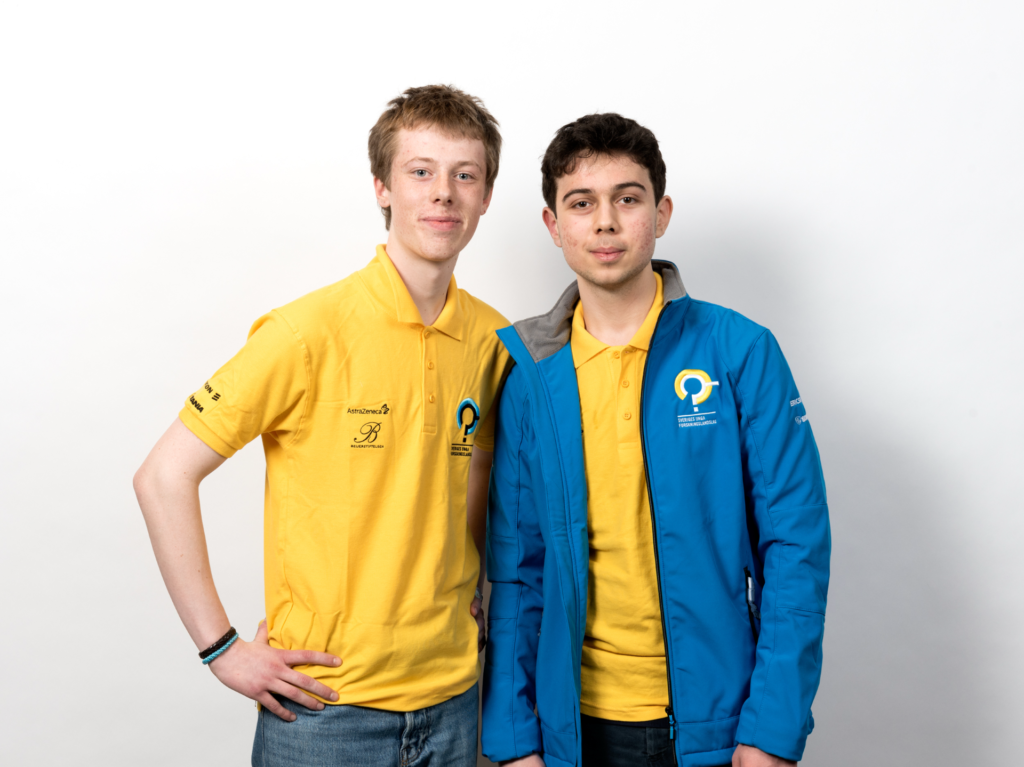
I am a recent graduate of Franklins Gymnasium in Sweden, where I completed this study during my final year (Grade 12) in the Natural Science and Technology program. Driven by my interest in marine ecology, ecotoxicology, and mathematical modeling, I conducted this study together with my co-author, Edin Hidic, using the laboratory facilities at Franklins Gymnasium and the open-source image processing software ImageJ.


Predicting Coastal Food-Web Collapse: An Ecotoxicological Framework Coupling Macroalgae Bioassays with Bifurcation Analysis
Microplastics are an increasing contaminant in coastal marine environments, yet their effects on primary producers and the consequences for food-web stability remain poorly quantified. This study combines laboratory bioassays with computational modelling to investigate how microplastic exposure affects the green macroalga Ulva lactuca and how these disruptions propagate to higher trophic levels, offering a replicable framework for ecosystem-level risk assessment. Algae were cultivated at eight microplastic concentrations (0–580 ppm) for 28 days, with cellular and structural traits quantified via digital image analysis. Cell density declined significantly and monotonically with increasing concentration (F(7, 23) = 74.2, p < 0.001, η² = 0.96 across 24 digitized image-analysis replicates), falling by 46%, while net dry biomass stabilized above 120 ppm, revealing a stress-induced…